
Key Takeaways
- BathWraps recommends a damp soft cloth, gentle-bristled brush, or Teflon-safe sponge with a non-abrasive, non-aerosol bathroom cleaner.
- Rinse the acrylic surface with warm water after cleaning; the grout-free wall system does not require resealing.
- Run the ceiling ventilation fan during use and for approximately 15 minutes afterward, and leave shower doors open between uses.
- For mineral deposits, BathWraps recommends a 1:1 mixture of water and vinegar followed by a warm-water rinse.
- Avoid abrasive powders and pads, aerosol cleaners, harsh chemicals, crystal drain cleaners, leave-on cleaners, acetone, and Magic Erasers.
- Recurring mold at the same spot, or a soft floor, usually means water is getting behind an old surface. That is a replacement conversation.
The routine that does most of the work
Nearly all shower cleaning problems are prevention problems. Water left on a surface deposits minerals as it evaporates; a damp room grows mildew. Two small habits do more than any product.
- Remove standing water from walls and glass after use. A soft cloth or squeegee helps reduce the mineral deposits left behind as water evaporates.
- Run the ceiling ventilation fan during the shower and for approximately 15 minutes afterward. This is the timing in the BathWraps cleaning guide.
- Clean with a non-abrasive, non-aerosol bathroom cleaner. Use a damp soft cloth, gentle-bristled brush, or Teflon-safe sponge, then rinse with warm water.
- Leave the door or curtain open between uses so the enclosure dries rather than staying sealed and damp.
Caring for acrylic: the easiest surface in the bathroom
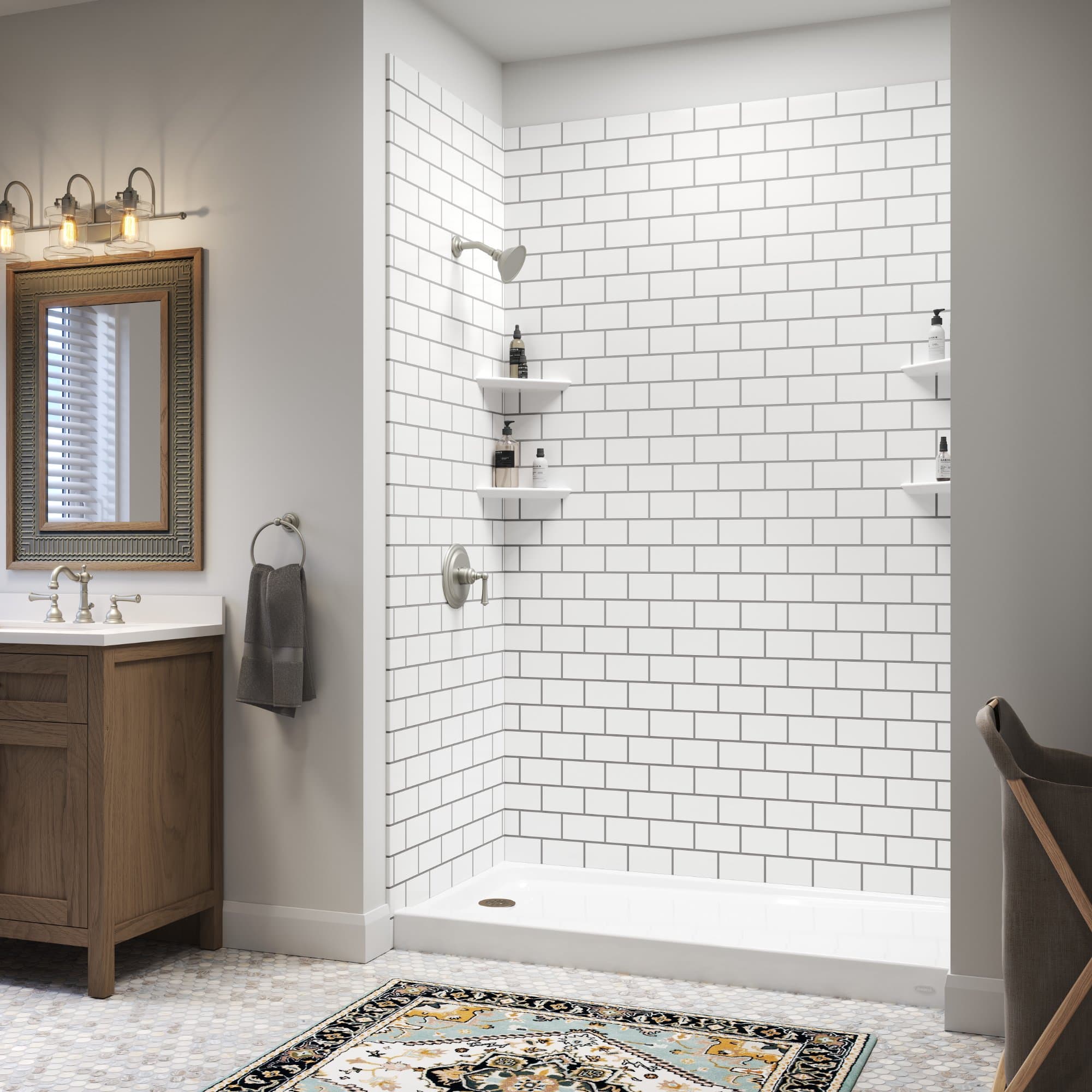
This is the shortest maintenance section in this guide, and that is the point. Because 100% virgin acrylic is non-porous, dirt and soap film sit on top of the surface rather than soaking into it. There is nothing to scrub out of, nothing to seal, and no annual upkeep on the calendar — the whole routine is mild soap, warm water, and a soft cloth.
The key difference from tile is what the care routine does not include: there are no grout joints to scrub and no stone or grout sealer to reapply. Routine care stays focused on the surface itself.
All you need
- A damp soft cloth, gentle-bristled brush, or Teflon-safe sponge
- A non-abrasive, non-aerosol bathroom cleaner
- Products the BathWraps guide lists for consideration, including Glass Plus, 409, Fantastik, Kaboom, Scrub Free, Green Works cleaners, and non-ammonia Windex
- A 1:1 mixture of water and vinegar for mineral deposits
- Warm water for the rinse after cleaning
What you can skip
The good news is mostly about what is *not* on the list. There is no grout sealer to reapply, no grout brush, no mildew treatment for porous seams, no annual regrouting fund, and no need for heavy-duty bathroom chemicals at all — because there is nothing porous holding onto anything.
Avoid abrasive cleaners, cleansing powders, scouring pads, aerosol products, harsh chemicals, acetone, crystal drain cleaners, leave-on cleaners, and Mr. Clean Magic Eraser. BathWraps also specifically lists Soft Scrub, Comet cleaners, Clorox Disinfectant, Ammonia-D, Lysol Disinfectant, and Down Disinfectant among products to avoid.
Ready to Get Started?
Build Your Dream Bathroom
Schedule your free in-home design appointment today. We'll measure your space, show you every option, and give you an exact price — no surprises, no pressure.
- Free in-home design consultation
- No interest, no payments until 2027
- Lifetime warranty on every installation
Prefer to talk? Call (864) 685-7691
Schedule Your Free Appointment
No obligation. Just options.
If you have tile: the maintenance schedule
Tile is not maintenance-free and never was. The tile itself is durable; the grout between it is a consumable that has to be kept up. Here is what that actually looks like.
| Task | How often | Why |
|---|---|---|
| Wipe down and squeegee | Every use | Keeps water out of porous grout |
| Clean with a pH-neutral tile cleaner | Weekly | Acidic cleaners degrade cement grout over time |
| Deep-clean grout lines | Every 1–3 months | Mildew colonizes the pores; surface cleaning does not reach it |
| Reseal grout | Every 1–2 years | Sealer wears off; unsealed grout absorbs water freely |
| Inspect and replace corner caulk | Annually | Movement joints crack and are a common entry point |
| Regrout | Every 5–10 years | Grout eventually fails regardless of care |
Skipping the resealing step is the most common failure, and it is invisible for years. Water passes through unsealed grout, works past aging membrane seams, and reaches the studs — which is the failure mode explained in detail in our acrylic vs. tile comparison.
One thing worth knowing: mildew stains in grout are usually not on the surface. They are growing inside the pores. That is why scrubbing harder does not fix it and why a shower can be genuinely clean and still look dirty.
Mold and mildew: prevention and removal
Mold needs three things — moisture, warmth, and something porous to colonize. Remove any one and it cannot establish. In a bathroom you control two of them.
Prevention
- Ventilate consistently. Use the ceiling fan during bathing and for approximately 15 minutes afterward.
- Dry the surfaces. Squeegee the walls, and hang towels where they can actually dry.
- Do not leave wet items in the shower — loofahs, mats, and bottles create permanently damp contact points.
- Lift bath mats after use rather than leaving them flat on a damp floor.
- Choose non-porous surfaces if you are replacing. There is nothing for mold to root into on acrylic.
Removal
On non-porous acrylic, surface mildew wipes off with mild soap and water — it is sitting on the surface, not growing into it. On grout or caulk, surface cleaning removes what you can see while leaving what is in the pores, which is why it returns within weeks. Discolored caulk is usually best replaced rather than cleaned; it is inexpensive and it works.
Hard water spots and soap scum
These are two different problems that get treated as one, which is why people scrub for an hour and get nowhere.
Hard-water spots are mineral deposits left behind as water evaporates. BathWraps recommends loosening mineral deposits with a 1:1 mixture of water and vinegar, then rinsing the surface with warm water. Do not escalate to an abrasive cleaner or pad.
Soap scum is the film left when soap reacts with minerals in the water. It responds to a mild detergent and warm water, and it builds up much more slowly if you switch from bar soap to a liquid body wash, which contains far less of the fatty material that forms the film.
Two notes of caution. Vinegar should be rinsed off rather than left to dry, and it should never be used on natural stone — acid etches marble and travertine permanently. And if buildup is heavy throughout the house, the underlying issue is water hardness, which a water softener addresses far more effectively than any cleaning routine.
Keeping shower glass clear
Glass is the surface that shows every mistake. Cloudy shower glass is almost always mineral etching, not dirt — and once glass is etched, it does not come back.
- Squeegee after every shower. On glass this is not optional if you want it to stay clear.
- Treat spots early with diluted vinegar; mineral deposits are easy to remove when fresh and nearly impossible once they have built up in layers.
- Never use abrasives or razor blades on coated glass — many enclosures have a protective coating that abrasion destroys.
- Ask whether your glass is coated at installation, and follow the specific care instructions for it.
- Clean the track and sweep on sliding doors; standing water there is a common mildew source people never look at.
The annual ten-minute inspection
Once a year, look at your shower rather than just cleaning it. Almost every expensive bathroom failure was visible for a long time before it became expensive.
- Press on the shower floor near the drain. Any flex or softness is a serious sign.
- Look at the corner joints and the wall-to-base seam for cracked or missing caulk.
- Check grout lines for cracks, gaps, or areas that look darker than the rest.
- Look at the wall on the other side of the shower for staining, bubbling paint, or soft drywall.
- If there is a room below, check its ceiling for stains.
- Watch the drain for slow drainage, which can indicate a partial blockage or a venting issue.
- Check that the exhaust fan actually moves air — hold a tissue to it.
- Confirm grab bars are still solid, if you have them.
When to stop maintaining and start replacing
There is a point where maintenance stops being economical. These are the signs that a shower has failed rather than gotten dirty:
- A soft or flexing shower floor. The substrate beneath is likely compromised.
- Recurring mold in the same location within days of cleaning.
- Cracked tile, or grout that crumbles when you touch it.
- Staining, bubbling paint, or soft drywall on the other side of the shower wall.
- Ceiling stains in the room below.
- A fiberglass surround that has yellowed, dulled, or crazed. The gel coat has worn through and the porous matting under it is exposed.
- You have regrouted more than once and it keeps failing.
Any of these mean water is reaching places it should not, and every month of delay makes the eventual repair larger — because at that point the cost is not a shower, it is framing and subfloor. This is also the strongest financial argument for a non-porous, lifetime-warranted surface: see best shower wall material and bathroom remodel ROI.
Frequently Asked Questions
How do you clean an acrylic shower?
Use a damp soft cloth, gentle-bristled brush, or Teflon-safe sponge with a non-abrasive, non-aerosol bathroom cleaner, then rinse with warm water. The BathWraps guide lists products including Glass Plus, 409, Fantastik, Kaboom, Scrub Free, Green Works cleaners, and non-ammonia Windex for consideration. Avoid abrasive pads and powders, aerosol products, harsh chemicals, acetone, crystal drain cleaners, leave-on cleaners, and Magic Erasers.
How do you get rid of hard water spots in a shower?
Hard-water spots are mineral deposits rather than dirt. For a BathWraps surface, use the manufacturer-recommended 1:1 mixture of water and vinegar, then rinse with warm water. Avoid abrasive cleaners or pads. Different materials require different care, so do not apply acrylic instructions to natural stone.
How often should shower grout be sealed?
Every one to two years. Sealer wears off with use and cleaning, and unsealed cement grout absorbs water freely. Grout also needs deep cleaning every one to three months and full replacement every five to ten years. Non-porous acrylic requires none of this.
How do I stop mold from growing in my shower?
Control moisture. BathWraps recommends running the ceiling ventilation fan during the shower and for approximately 15 minutes afterward, leaving shower doors open when the shower is not in use, and rinsing the surface with warm water after cleaning.
Why does mold keep coming back in the same spot?
Mold that returns within days of cleaning, especially low on a wall or at a corner joint, usually means moisture is reaching that area from behind the surface rather than sitting on it. At that point cleaning treats a symptom. It is worth having the shower inspected before the damage reaches framing or subfloor.
Why is my shower glass cloudy and can it be fixed?
Cloudy shower glass is usually mineral etching rather than dirt, and etched glass does not return to clear. Prevention is the only reliable answer: squeegee after every shower and treat mineral spots early with diluted vinegar. Avoid abrasives and razor blades, since many enclosures have a protective coating that abrasion destroys.
When should I replace my shower instead of cleaning it?
Replace when the shower floor feels soft or flexes, when mold returns in the same spot within days, when grout crumbles or tile cracks, when there is staining or soft drywall on the other side of the wall, when there are ceiling stains in the room below, or when a fiberglass surround has yellowed or crazed. These indicate water is reaching places it should not, and delay makes the eventual repair larger.
