
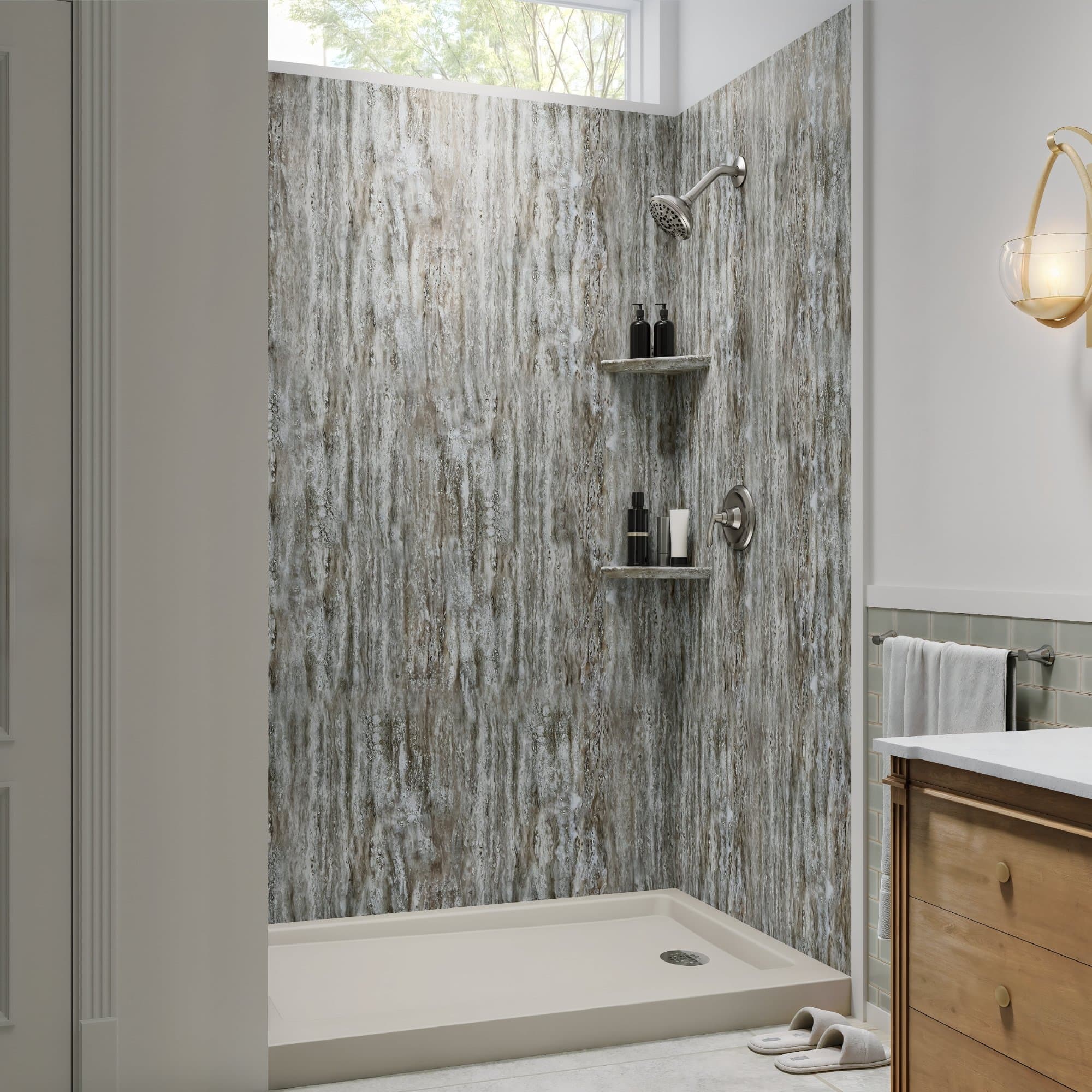
Key Takeaways
- 100% virgin acrylic is non-porous and fully waterproof. Grout is porous by design and absorbs water.
- Water that passes through grout reaches the studs and subfloor, where damage goes unseen for years.
- Acrylic carries a limited lifetime warranty. No manufacturer warranties grout for life, because grout is a consumable.
- Acrylic installs in as little as one day; tile typically takes three to six weeks across multiple trades.
- Not all acrylic is equal — 100% virgin acrylic, regrind blends, and fiberglass are three different products.
- Tile still wins on one thing: fully custom geometry. If you want a curbless wet room with a mosaic inlay, tile is the material.
Head-to-head comparison
| 100% virgin acrylic | Tile | |
|---|---|---|
| Porosity | Non-porous — absorbs no water | Tile body is dense; grout is porous |
| Waterproofing | The surface itself is the barrier | Depends on a membrane behind the tile |
| Seams | Minimal, sealed | Hundreds of feet of grout lines |
| Mold & mildew | Nothing for it to grow into | Grout holds moisture and stains |
| Ongoing maintenance | Wipe clean — no sealing | Reseal every 1–2 yrs; regrout every 5–10 |
| Warranty | Limited lifetime | None available on grout |
| Install time | As little as 1 day | 3–6 weeks |
| Bathroom out of service | ~1 day | Most of the project |
| Up-front cost | Moderate | Higher |
| 20-year cost of ownership | Low | Higher — sealing, regrouting, potential repairs |
| Design flexibility | Dozens of patterns, fixed geometry | Unlimited geometry and layout |
| Slip resistance | Textured slip-resistant bases available | Depends on tile choice and grout lines |
| Repairability | Panel replacement by the installer | Individual tiles and grout can be patched |
The grout problem, explained
Here is the part that surprises most homeowners: tile is not waterproof. A tile shower is a water-resistant surface installed over a waterproofing membrane. The tile sheds most water, and the membrane is supposed to catch the rest. Grout sits between them, and cement-based grout is porous — it absorbs water by design.
That absorbed water has to go somewhere. Sealing slows the process, which is why grout sealer needs reapplying every year or two. When the seal wears — and it always wears — moisture works through the grout, past aging membrane seams and corner joints, and into the wall cavity. There it reaches the studs and the subfloor.
The failure is silent. There is no drip, no puddle, no obvious sign. Homeowners typically discover it years later during a remodel, when the old shower comes out and the framing behind it is soft. In humid climates like Upstate South Carolina, where bathrooms stay damp longer between uses, the timeline compresses.
What about epoxy grout?
Epoxy grout is a genuine improvement — it is far less porous than cement grout and does not require sealing. It is also more expensive, considerably harder to install correctly, and unforgiving of mistakes during installation. It does not eliminate the underlying issue either: a tile shower still has hundreds of feet of joints, still depends on a membrane you cannot inspect, and still comes with no lifetime warranty. If you are committed to tile, epoxy grout is worth the upgrade. It narrows the gap; it does not close it.
Ready to Get Started?
Build Your Dream Bathroom
Schedule your free in-home design appointment today. We'll measure your space, show you every option, and give you an exact price — no surprises, no pressure.
- Free in-home design consultation
- No interest, no payments until 2027
- Lifetime warranty on every installation
Prefer to talk? Call (864) 685-7691
Schedule Your Free Appointment
No obligation. Just options.
What “100% virgin acrylic” actually means
Not all acrylic is equal, and the distinction is worth understanding before you compare quotes. Three products get sold under loosely similar language, and they are not the same thing.
Virgin acrylic is manufactured from new, unused resin. Regrind or recycled acrylic blends in reprocessed material, which introduces inconsistencies in density and color and reduces impact resistance over time. Fiberglass — often confused with acrylic — is a gel-coat surface over fiberglass matting; the gel coat is thin, and once it wears through, the porous substrate underneath is exposed. That is why fiberglass units yellow, dull, and crack.
| 100% virgin acrylic | Regrind acrylic blend | Fiberglass / gel coat | |
|---|---|---|---|
| Composition | New resin, consistent throughout | Reprocessed material blended in | Thin gel coat over matting |
| If the surface wears | Same material underneath | Variable | Porous substrate exposed |
| Color stability | High | Variable | Yellows over time |
| Impact resistance | High | Reduced | Low — cracks and flexes |
| Typical lifespan | Decades | Shorter | 10–15 years |
Patriot Showers installs BathWraps 100% virgin acrylic. It is non-porous top to bottom, so there is no substrate to expose and nothing for mold to root into. It is custom-measured to your bathroom before install day, and it carries a limited lifetime warranty on the product. That warranty is only possible because of what the material is.
- Non-porous — water cannot be absorbed into the surface
- Grout-free — no lines to seal, scrub, or replace
- Mold- and mildew-resistant — nothing porous for spores to colonize
- Custom-measured — manufactured to your exact dimensions, not cut to fit on site
- Limited lifetime warranty — on BathWraps products
- Dozens of patterns — marble, slate, subway, shiplap, travertine, and more
When you compare quotes, ask which of the three you are being offered, and ask for it in writing. It is a fair question and any honest company will answer it directly. More on vetting: how to choose a remodeler.
Cost over twenty years, not twenty minutes
Comparing a tile quote to an acrylic quote on day one misses most of the picture. Tile has a recurring bill attached to it.
| Over 20 years | Acrylic | Tile |
|---|---|---|
| Up-front project cost | Moderate | Higher |
| Grout sealing (10–20 applications) | None | Recurring — DIY time or paid service |
| Regrouting (2–4 cycles) | None | Recurring cost per cycle |
| Cracked tile / failed grout repairs | None | Likely at least once |
| Water damage remediation risk | Very low | Real, and expensive when it happens |
| Cleaning time per week | Minutes | Significantly more — grout scrubbing |
| Warranty coverage | Limited lifetime | None on the failure point |
For a full cost breakdown of either path, see our walk-in shower cost guide.
Four things people get wrong about acrylic
“Acrylic looks cheap.”
This belief comes from fiberglass, not acrylic — specifically the one-piece yellowed units installed in tract housing from the 1970s through the 1990s. Modern virgin acrylic panels are manufactured in patterns that replicate marble veining, slate, travertine, subway tile, and shiplap, with matching trim and fixtures. In a finished bathroom, most people cannot tell by looking. What they can tell, five years later, is which one still looks new.
“It is just a liner over the old shower.”
A properly done acrylic remodel is not a cover-up. The old unit comes out, the substrate is inspected, damage is repaired, and the new system is installed against sound structure. Installing over unaddressed damage would seal an existing problem behind a new wall — which is exactly the failure mode that gave shower liners a bad name.
“You cannot repair it.”
Panels can be replaced by the installer, and the limited lifetime warranty exists specifically to cover product failure. Tile is easier to patch in the sense that you can replace one tile; it is harder in the sense that a matching tile from eight years ago usually no longer exists.
“Acrylic will not last as long as tile.”
Tile itself lasts a very long time. Grout does not, and grout is what is actually holding water back. In practice, a tile shower usually outlives its grout by decades — which means a maintenance cycle, not a lifespan.
When tile is genuinely the right call
We are an acrylic company, and we will still tell you plainly: tile is the better material for some projects.
- Fully custom geometry — a curbless wet room, an irregular footprint, a bench built into a non-standard corner
- A specific artistic vision — mosaic inlays, hand-glazed zellige, patterned floor work
- A historic restoration where period-accurate materials matter
- You genuinely enjoy the upkeep and want a surface you can re-detail over time
If that is your project, hire an excellent tile setter, insist on a properly installed waterproofing membrane, budget for epoxy grout, and plan on the maintenance schedule. For the far more common project — a clean, safe, durable, easy-to-clean shower a family uses every day — non-porous acrylic wins on every measure except geometry.
Frequently Asked Questions
Is an acrylic shower better than tile?
For most homeowners, yes. 100% virgin acrylic is non-porous and fully waterproof, requires no sealing or regrouting, resists mold and mildew, installs in as little as one day, and carries a limited lifetime warranty. Tile relies on grout, which is porous by design, absorbs water, needs resealing every one to two years, and carries no lifetime warranty. Tile remains the better choice only when a project requires fully custom geometry such as a curbless wet room.
Do acrylic showers look cheap?
Modern 100% virgin acrylic systems are manufactured in patterns that replicate marble, slate, subway tile, shiplap, and travertine, with matching trim and fixtures in your choice of finish. Most people cannot tell the difference visually, and the surface stays looking new far longer because it has no grout lines to stain. The reputation comes from 1970s–1990s fiberglass units, which are a different product.
Why does grout fail in showers?
Cement-based grout is porous and absorbs water. Sealer slows absorption but wears off and must be reapplied every one to two years. As the seal degrades, moisture works through the grout and past aging membrane seams into the wall cavity, reaching studs and subfloor. The damage is usually invisible until the shower is removed.
Is epoxy grout better than regular grout?
Yes. Epoxy grout is far less porous than cement grout and does not require sealing, so it is a genuine improvement. It is also more expensive and considerably harder to install correctly. It does not remove the underlying issue — a tile shower still has hundreds of feet of joints, still depends on a membrane you cannot inspect, and still carries no lifetime warranty.
What is the difference between acrylic and fiberglass showers?
Fiberglass is a thin gel-coat finish over fiberglass matting. Once the gel coat wears through, the porous substrate underneath is exposed, which is why fiberglass units yellow, dull, and crack, typically needing replacement in 10 to 15 years. 100% virgin acrylic is non-porous throughout, far more impact-resistant, and carries a limited lifetime warranty.
Can you put acrylic over an existing tile shower?
The existing surface is removed and the substrate inspected first. Installing over unaddressed damage would trap an existing problem behind a new wall. If we find rot or a soft subfloor, we show you photos and repair it before the new system goes in.
How do you clean an acrylic shower?
A non-abrasive cleaner and a soft cloth. There is no grout to scrub, no sealer to reapply, and no mildew growing into a porous surface. Avoid abrasive pads and harsh solvents, and the finish stays intact.
